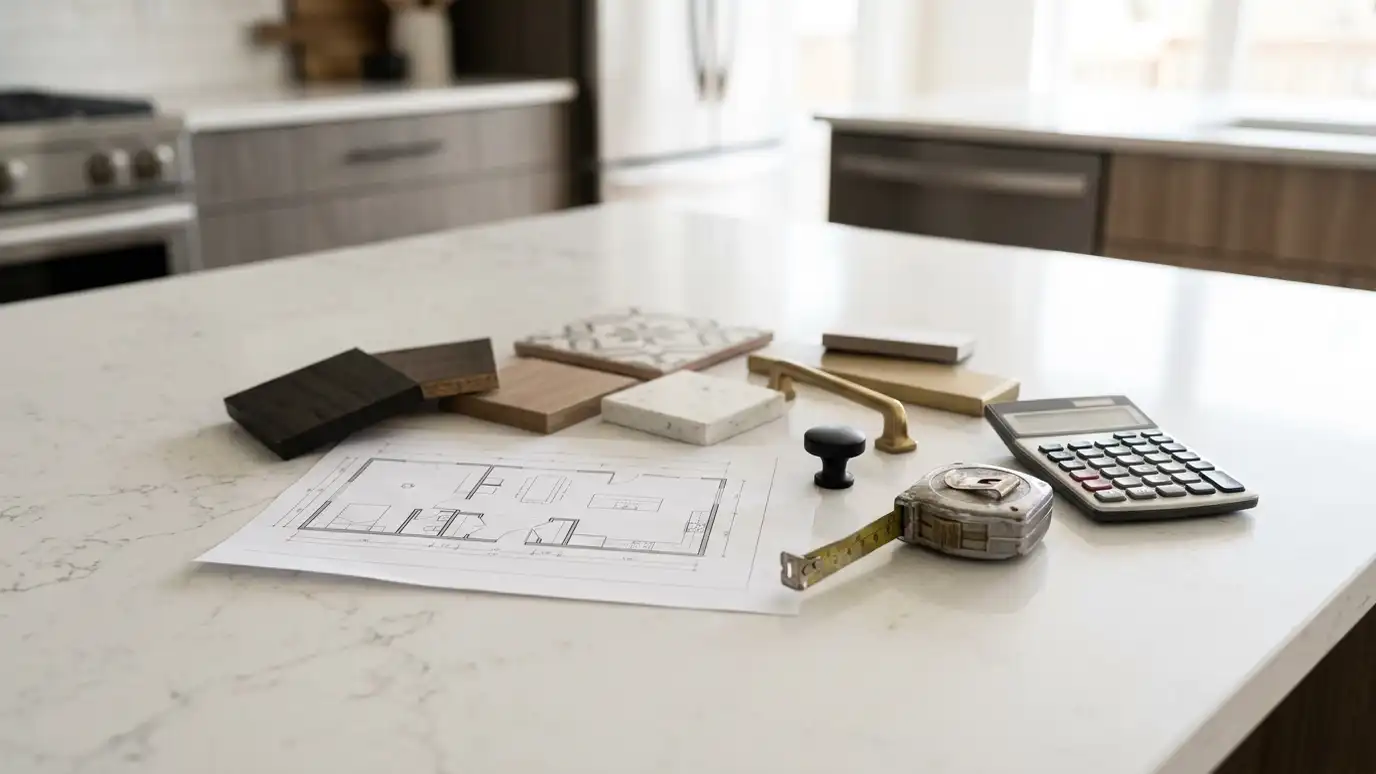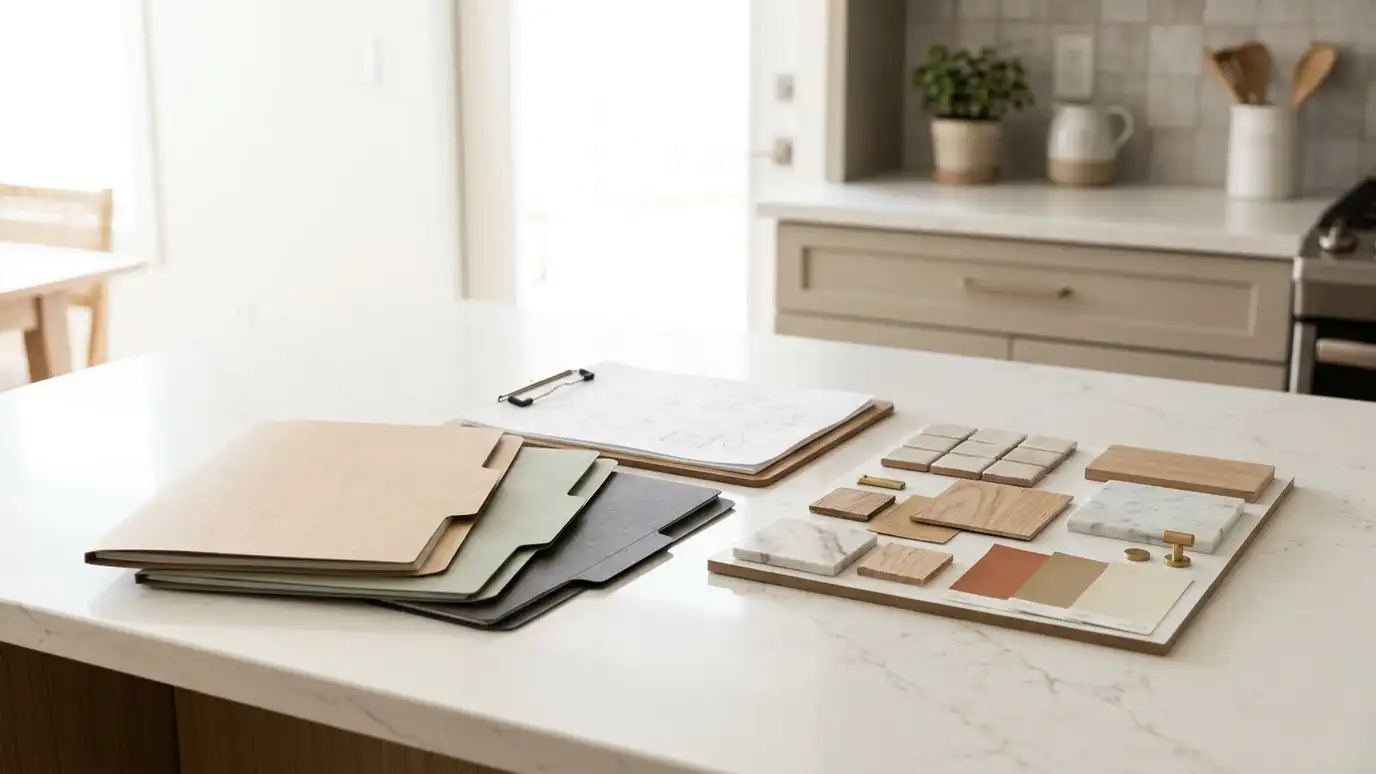
The principle: spend on what is hard to change
A good rule is to put money into what you cannot easily change later and save on what you can. Layout, cabinet quality, lighting, ventilation and the floor are expensive to redo. Hardware, paint, faucets and decor are not.
Think about daily use, too. Anything you touch often, such as drawer slides, hinges and the faucet, rewards a higher quality level.
Worth the splurge: cabinets
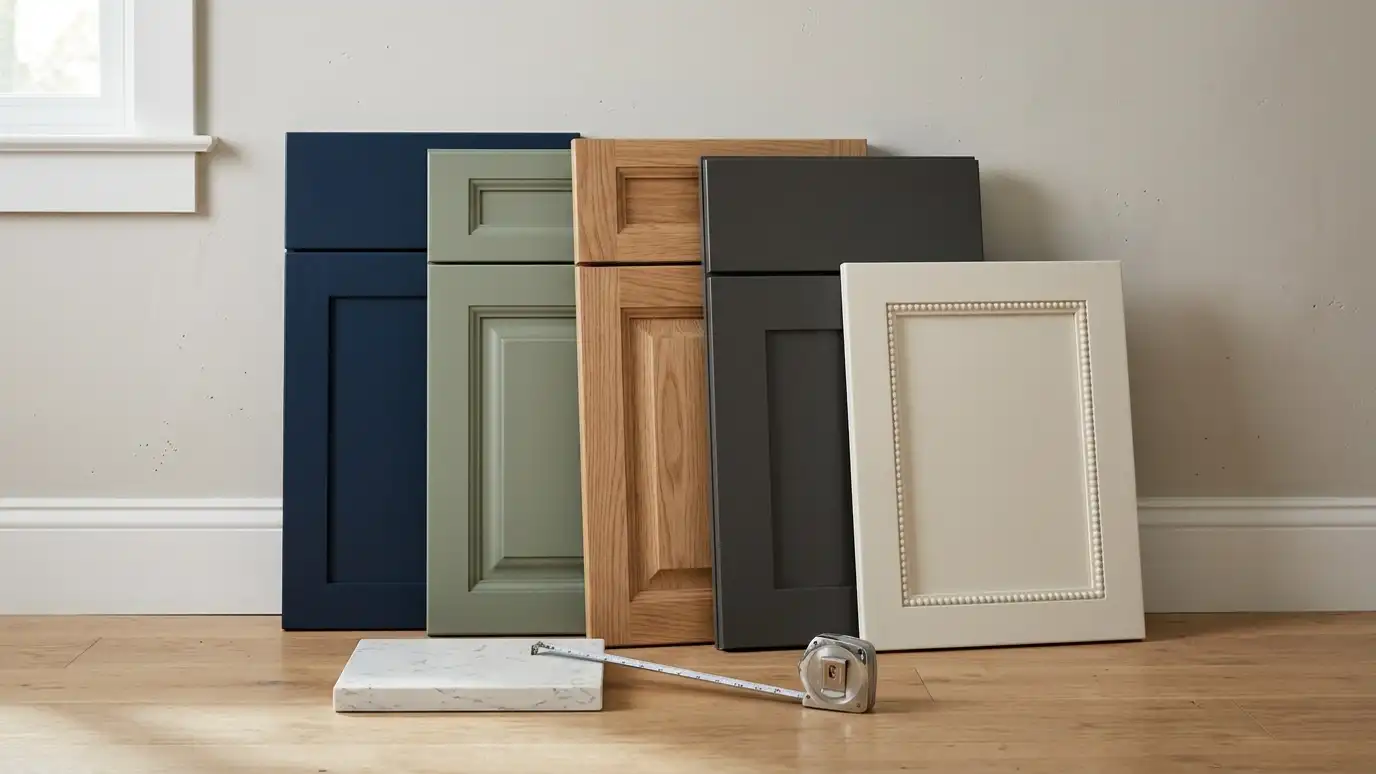
Cabinets take the most daily abuse and are the biggest part of the room. Better boxes, finishes and hardware last longer and feel better. If the budget is tight, consider quality over quantity, with fewer upper cabinets and more good lower drawers.
Soft-close hinges, full-extension slides and thoughtful interior storage are small upgrades that make a large difference.
Worth the splurge: lighting and ventilation
A beautifully finished kitchen with poor lighting is a disappointment. Layered lighting with dimmers changes how the room looks and works. Effective ventilation protects your cabinets and air quality.
These are also hard to add later without opening walls, so they belong in the initial plan.
Smart places to save
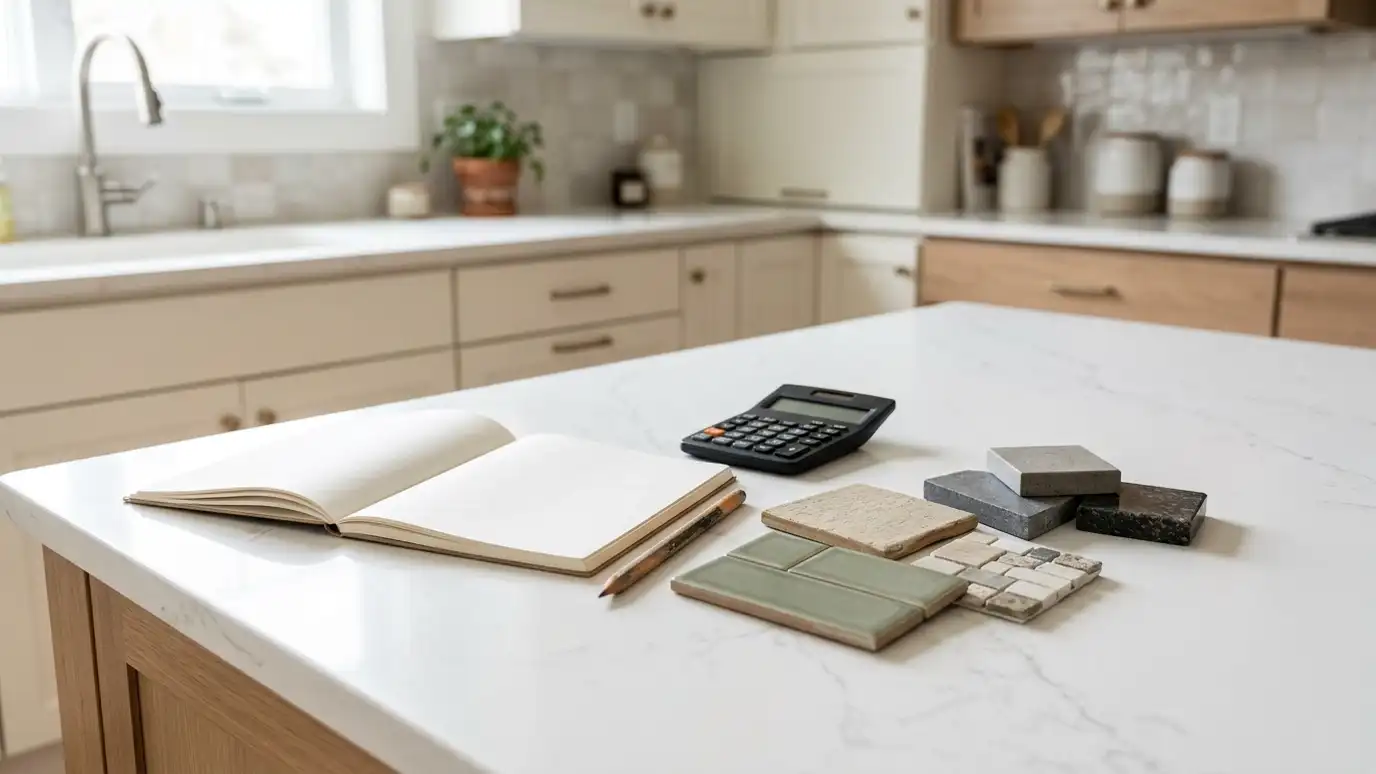
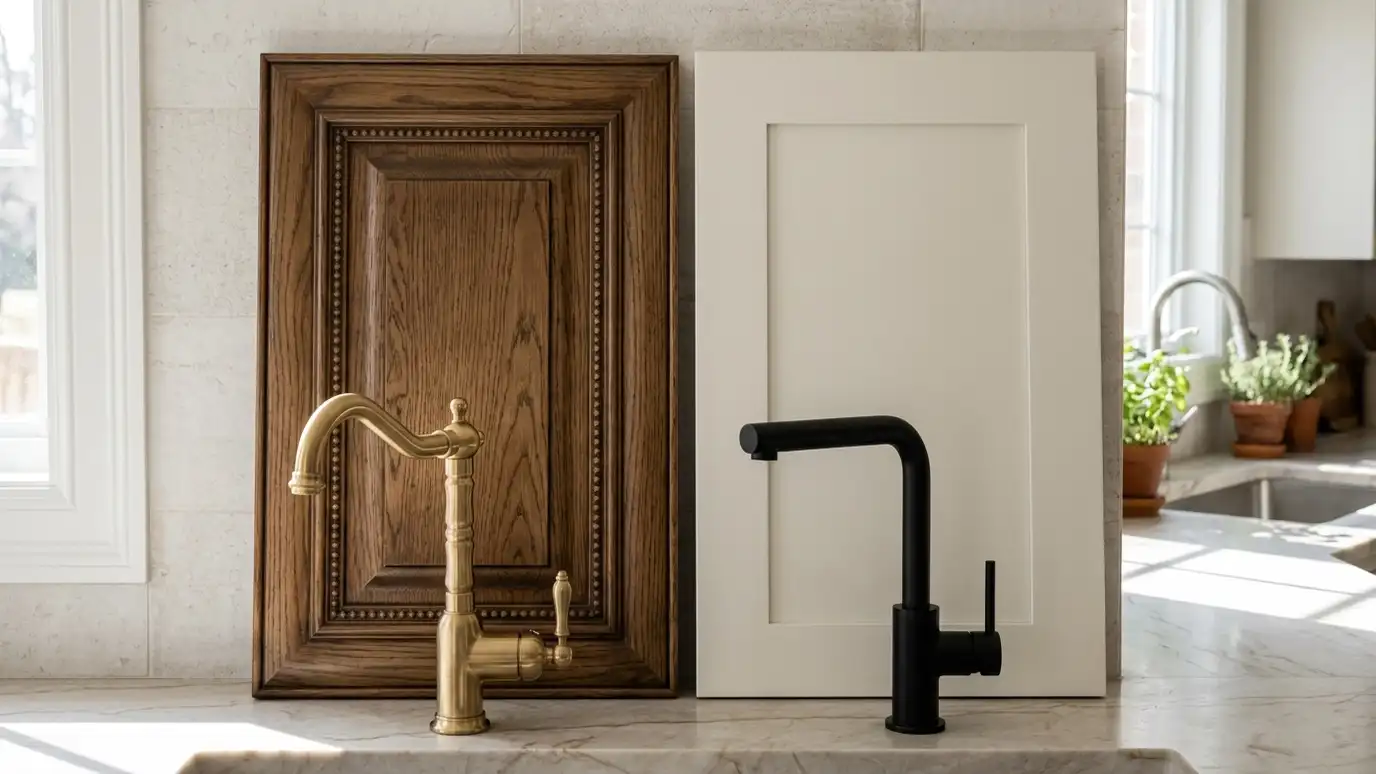
Hardware, faucets and decorative lighting can be upgraded later. Mid-range tile can look excellent with good installation. A sturdy quartz or granite does not need to be the most exotic slab.
Appliance packages often offer savings, and you may not need top-tier features that you will rarely use.
Mix high and low
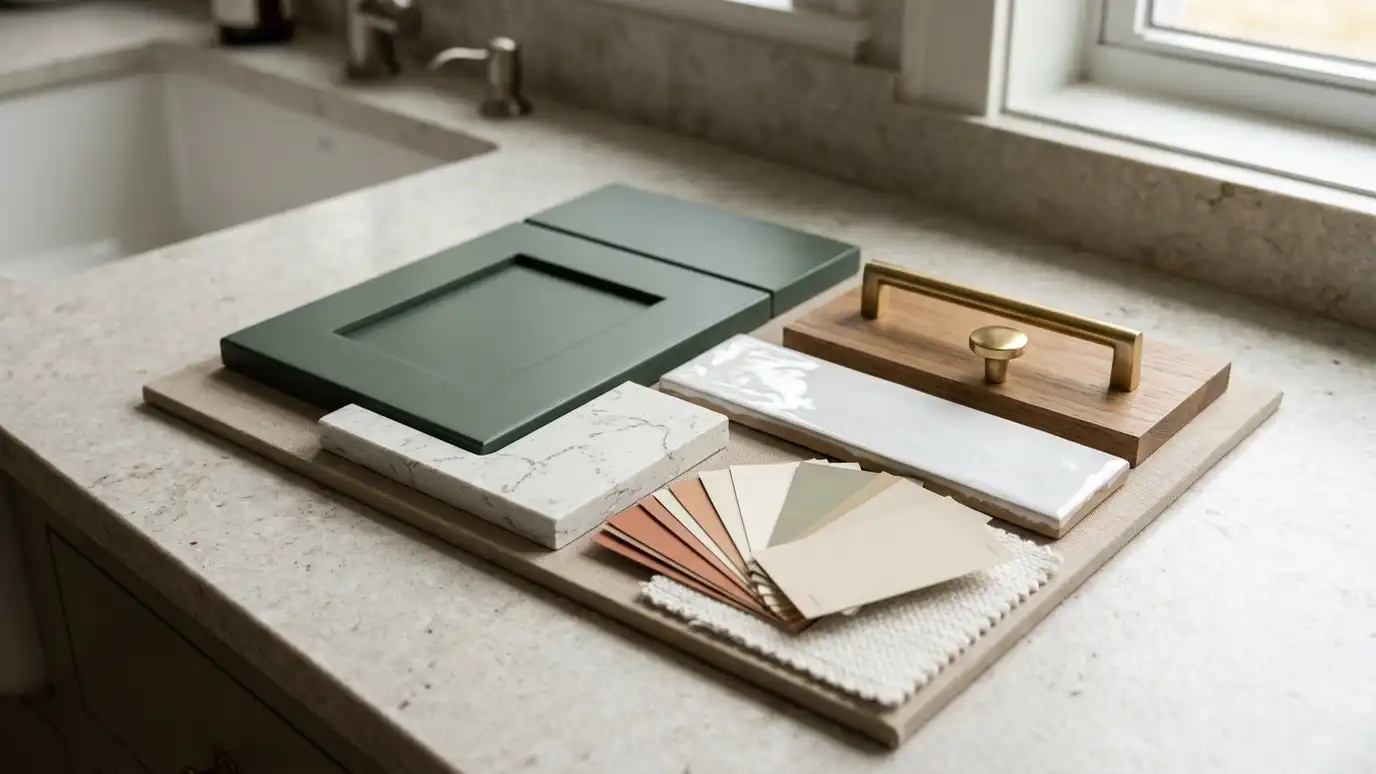
Designers often use a statement material in one place, such as a showy island counter or backsplash behind the range, and simpler materials elsewhere. That keeps costs sensible and gives the eye something to enjoy.
Mixing finishes on purpose looks sophisticated. Mixing without a plan looks accidental.
Avoid false economies
Skimping on prep, such as leveling floors, correcting framing or using the wrong underlayment, shows up in the finished result. So does cutting corners on installation. A quality product badly installed is a poor value.
Choosing a contractor on price alone, without comparing scope, often costs more in the end.
A simple way to decide
Make a list of every major item, rank it by how often you use it and how hard it is to change and spend in that order. The top of the list gets quality. The bottom gets savings.
Revisit the list as selections come in so you stay on course.
Invest in layout, cabinets, lighting and ventilation, and save on hardware, decor and anything easy to upgrade later.