Why surprises happen
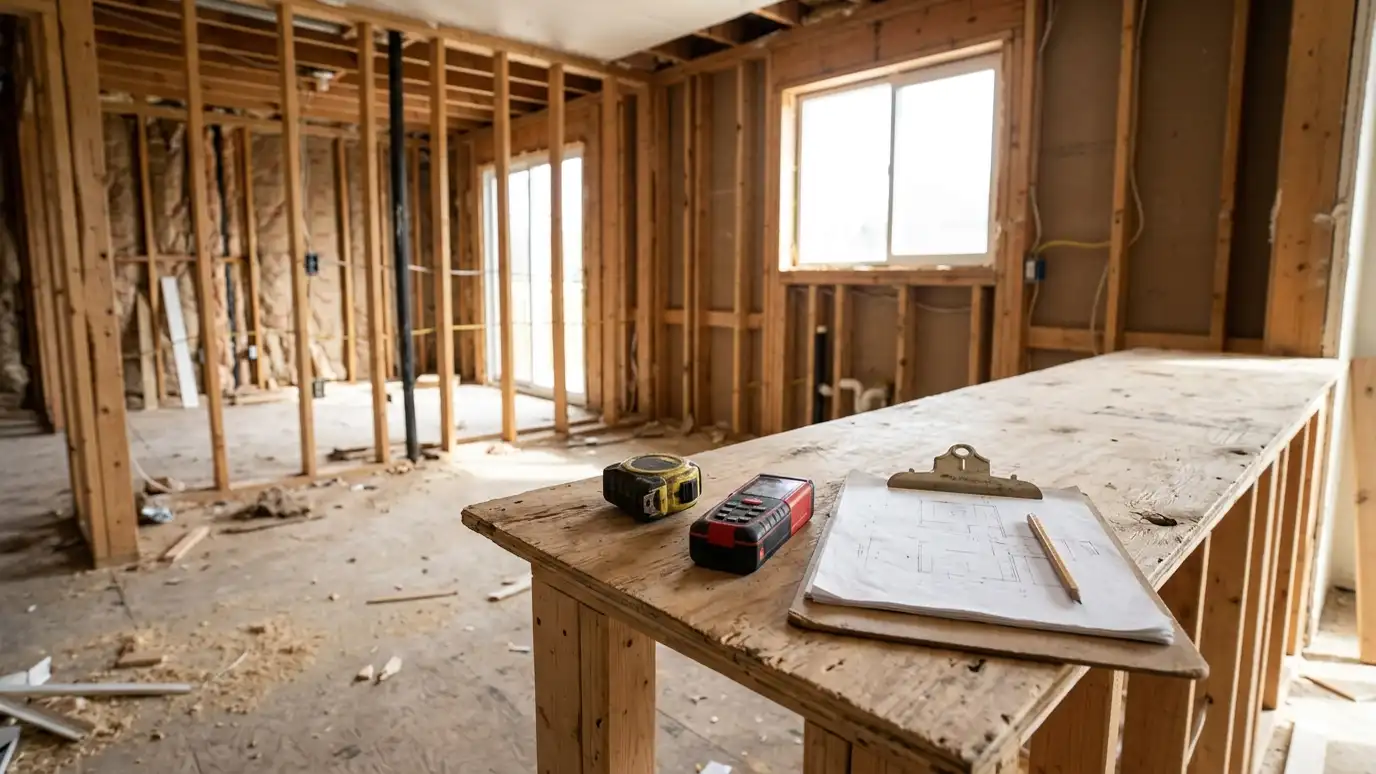
Walls and floors hide the history of a house. Previous owners may have made repairs, additions and shortcuts that nobody documented. Until demolition, no one can see what is behind the cabinets and under the floor.
That is why a contingency is part of every careful budget.
Old or unsafe wiring
Older homes may have outdated wiring, ungrounded outlets, overloaded circuits or amateur splices. Modern kitchens need more circuits than older ones were built for.
A qualified electrician can evaluate the panel and wiring and recommend updates.
Plumbing problems
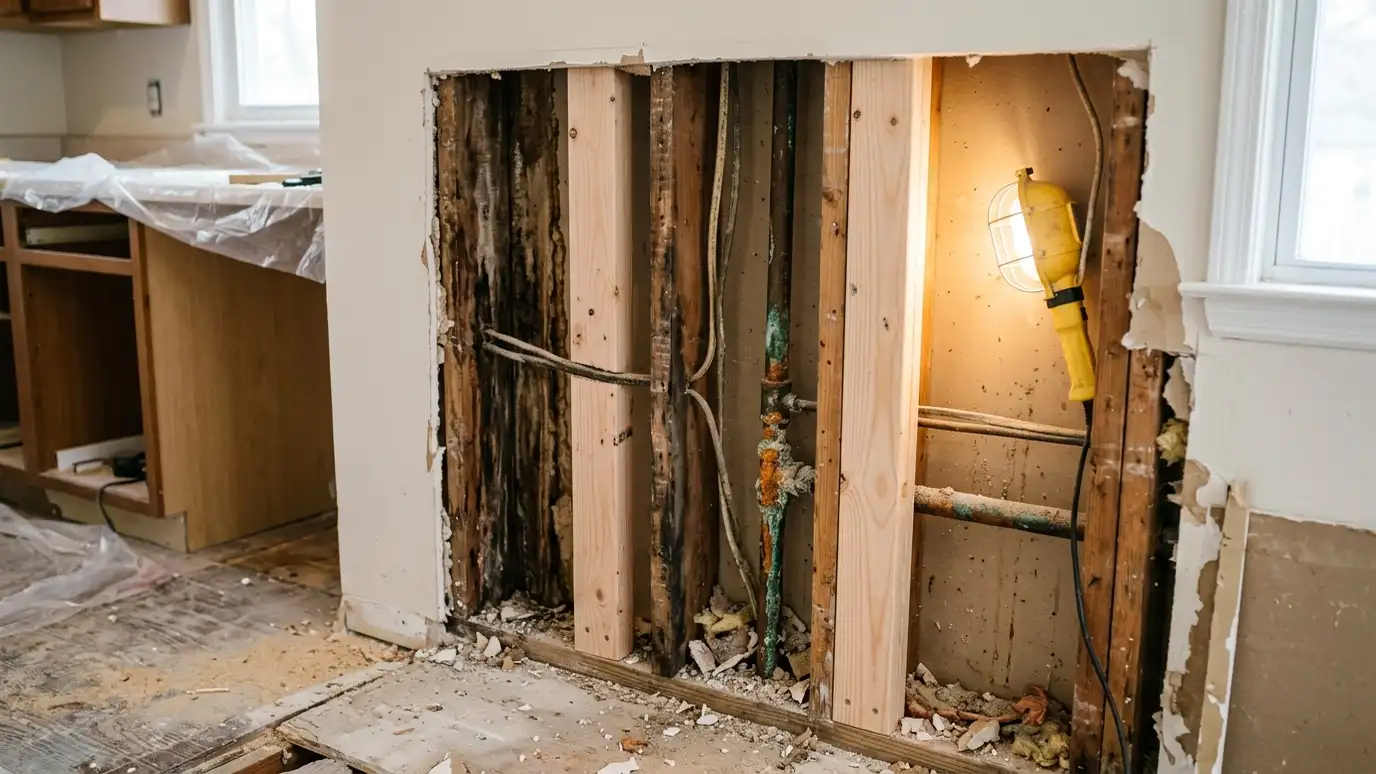
Corroded supply lines, slow drains, hidden leaks and poor venting appear when walls open. Past leaks may have damaged framing and subfloor. Old shutoff valves can fail when touched.
Fixing plumbing while the walls are open is far cheaper than doing it later.
Water damage and mold
Slow leaks under sinks, dishwashers and refrigerators can soften subfloors and encourage mold. If mold is found, the source must be fixed and affected materials handled properly.
Testing and professional remediation may be advised depending on the extent.
Structural surprises
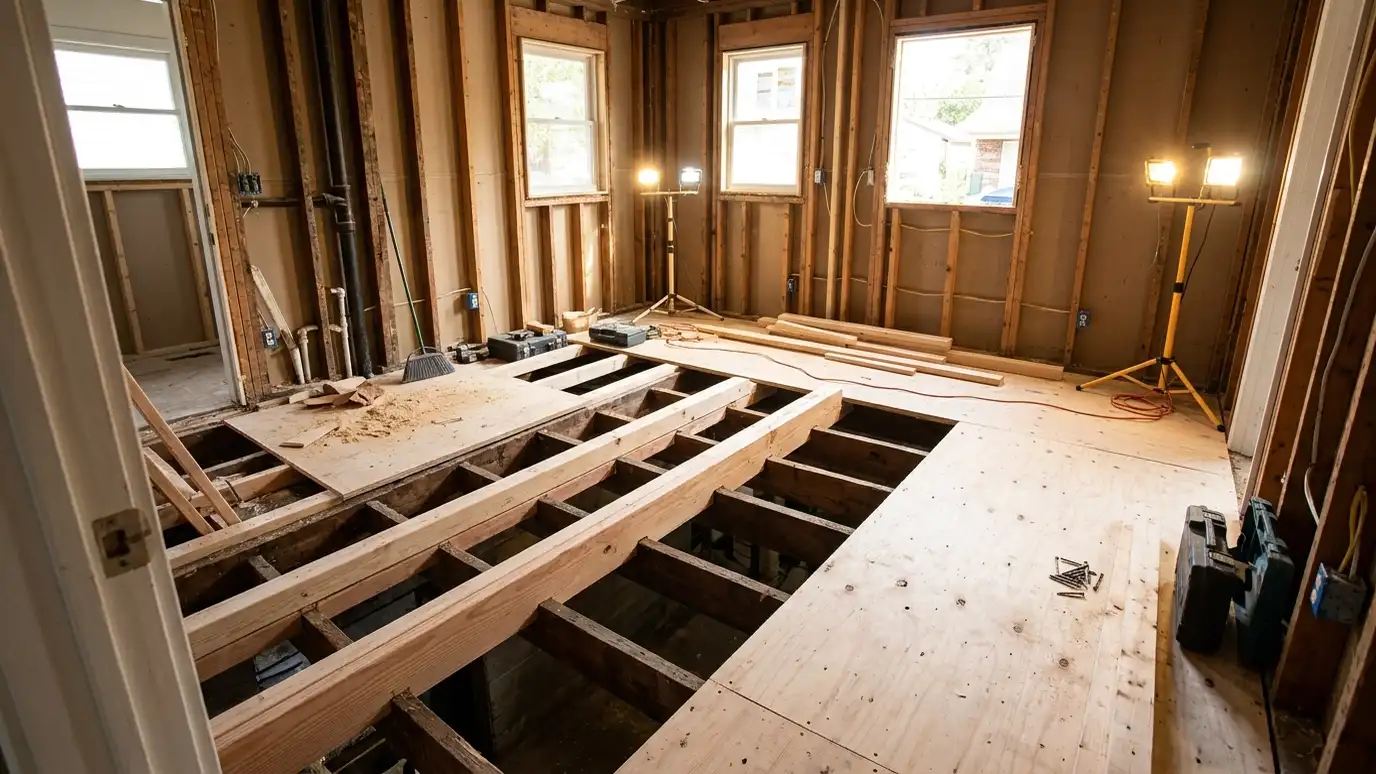
Notched joists, sagging beams, undersized headers and unexpected load paths can appear. Walls may carry more load than expected, or less. A structural engineer can evaluate and recommend repairs.
Do not remove walls without confirming what they support.
Older materials
Homes built decades ago may contain asbestos in flooring, adhesives or insulation and lead in paint. These materials need testing and proper procedures. A cautious contractor will recommend testing before disturbing suspect materials.
Safety for your family and the crew comes first.
How to plan for the unexpected
Set aside a contingency, ask your contractor how unforeseen conditions are handled, and agree on a process for approving changes in writing. An early site evaluation reduces surprises.
When something shows up, a calm, documented response keeps the project moving.
Keep a contingency, evaluate the house before design and agree on how unforeseen conditions are priced and approved.